



What the Echelon EX-7s Trains
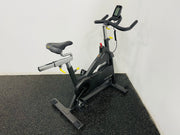
The Echelon EX-7s is a connected indoor cycling bike with 32 indexed resistance levels, a resistance knob, adjustable seat and handlebars, and SPD-compatible pedals with toe cages. These features support steady aerobic rides, intervals, and structured cadence-and-resistance sessions. Manufacturer documentation does not provide a detailed training program or resistance-to-wattage conversion table, so do not assume a particular resistance number represents a fixed workload.
Indoor cycling primarily challenges the muscles controlling the pedal stroke. The quadriceps contribute during the downstroke, while the glutes and hamstrings assist with hip extension and the return phase. The calves help at the ankle, and the trunk muscles help maintain a stable position. Cycling is not a substitute for a complete strength program.
How resistance changes the emphasis
Lower resistance with a controlled, quicker rhythm suits warm-ups and easier aerobic riding. Higher resistance makes each revolution more demanding and can support shorter efforts or seated climbing practice. Increase resistance gradually and preserve a smooth pedal stroke rather than forcing a heavy setting.
EX-7s Setup Before Your First Ride
Place the bike on solid, level ground with clearance for mounting and dismounting. Check that the seat, handlebars, pedals, and adjustment mechanisms are secure. The EX-7s provides seat height, seat fore/aft, handlebar height, and handlebar fore/aft adjustment. Make small changes, then test the position at an easy pace.
Set the seat so you can pedal without rocking your hips or locking your knees at the bottom of the stroke. Position the handlebars so your grip is relaxed and your pelvis remains stable. Riders sharing the bike should record their preferred settings. If using clip-in shoes, confirm that the cleats engage and release correctly; with toe cages, secure the feet without overtightening.
Research identifies discrepancies between the Uplift listing and Echelon documentation involving product weight, footprint, maximum user weight, screen description, and flywheel information. Treat those as specifications to verify, not assumptions about the individual used bike. Confirm the model label and current listing before relying on dimensions or capacity.
A practical pre-ride checklist
Confirm that the bike is stable, adjustment levers are locked, both pedals are present and tight, and the safety brake operates. Check that the display powers on if connected features matter to your workout. The manual indicates that setup involves an Echelon account and plan selection, so do not assume a used unit includes an active subscription or software entitlement.
Proper Cycling Form and Exercise Steps
Begin with a short warm-up at low resistance. Sit tall with your pelvis centered over the bike, shoulders relaxed, elbows soft, and hands resting lightly on the handlebars. Keep your knees aligned with your feet instead of allowing them to collapse inward or drift outward. Maintain a quiet upper body and smooth pedal stroke rather than bouncing in the saddle.
For a seated effort, select manageable resistance, begin pedaling, and gradually turn the knob until the effort matches your planned interval. Keep breathing controlled and maintain your position as fatigue develops. To finish, reduce resistance and pedal easily before stopping. Wait until the pedals stop completely before dismounting.
Introduce standing work only after you can control seated pedaling. When rising briefly, keep your weight centered, hands steady, and rhythm controlled. The manufacturer advises against adjusting resistance or handlebars while standing and against riding standing at high RPM. For beginners, seated riding is the simpler way to learn pacing and technique.
Common mistakes to correct
A seat that is too high or low can encourage hip rocking, knee locking, or an awkward pedal stroke. Excessive handlebar reach may round the back and overload the hands. Tight gripping, shrugged shoulders, saddle bouncing, and chasing a resistance number instead of maintaining control are also common errors. Reduce effort when technique deteriorates.
Do not dismount while the crank is moving or reach for adjustments during a hard effort. Stop if you experience faintness, dizziness, unusual shortness of breath, chest pain, or other pain, consistent with the manufacturer’s safety guidance.
Sets, Reps, and Workout Ideas
Cycling does not use repetitions like lifting, so measure work by time, resistance, and repeatable effort. A beginner can start with two or three rides weekly: 5 to 10 minutes of easy riding, 10 to 20 minutes at a conversational effort, and several easy minutes to finish. Keep resistance light enough for smooth control while learning the bike’s adjustments.
For a simple interval session, warm up for 8 to 10 minutes, then complete 4 to 6 rounds of 30 to 60 seconds at a challenging but controlled effort, followed by 90 to 120 seconds of easy riding. Cool down gradually. Progress one variable at a time by adding an interval, extending work, or increasing resistance slightly.
For a longer steady session, ride 25 to 45 minutes at an even moderate effort after warming up. Appropriate advanced riders can try 6 to 10 intervals of 2 to 4 minutes with equal or slightly longer recovery, provided they maintain stable hips and controlled pedaling. These are practical examples, not manufacturer-prescribed settings.
How to progress without losing form
Log duration, interval count, resistance, and how the session felt. Progress when you can finish without hip rocking, bouncing, uncontrolled breathing, or unusually long recovery. Use easier rides between demanding sessions and prioritize regular practice over maximal resistance.
Complementary Exercises for a Balanced Program
The EX-7s provides lower-body cycling and cardiovascular training, but it does not train pushing, pulling, or full-body strength through a broad range of motion. Complement rides with controlled squats or sit-to-stands, hip hinges, step-ups, rows, presses, and plank variations. These movements address patterns cycling alone does not cover.
A practical weekly structure can include two or three cycling sessions and two nonconsecutive strength sessions, with easier work between demanding sessions. Mobility work for the hips, ankles, and upper back can accompany an easy ride. Keep strength work separate from a hard ride if fatigue affects technique.
Safety and Used-Equipment Inspection
Warm up, keep water and a towel nearby, and wipe the bike down after use. Inspect wear components regularly, including pedals, adjustment hardware, the crank area, and visible belt or cable components. Resolve unusual noise, belt slip, crank looseness, damaged pedal threads, display defects, or error messages before normal training.
The current used-item listing is authoritative for that individual bike’s condition, included accessories, return terms, and seller coverage. Do not infer operating hours, servicing, warranty, subscription access, or electronic function from general EX-7s specifications. Ask whether the touchscreen boots, resistance changes consistently, the safety brake works, the power adapter and cables are included, and listed components are present.
The model is described as having a rotating touchscreen and connected features, but the condition of those functions must be inspected on the particular used unit. Verify the model or serial label, test the bike where possible, and follow the manufacturer manual for assembly and operation. Stop rather than training through pain or unusual symptoms.
Frequently asked questions
What muscles does the Echelon EX-7s work?
It primarily trains the quadriceps, glutes, hamstrings, and calves. Trunk muscles help stabilize you, but separate strength exercises support broader development.
How should I set up the Echelon EX-7s?
Adjust seat height and fore/aft position, then set the handlebars for relaxed, stable posture. Secure every adjustment before riding.
How often should a beginner ride?
Start with two or three easy-to-moderate rides weekly, then progress gradually while maintaining controlled form and allowing appropriate recovery.
Should beginners use standing intervals?
Begin seated to learn pacing and control. Add brief standing work only after you can remain stable, and avoid high-RPM standing.
Does a used Echelon EX-7s include a subscription?
Do not assume so. Connected setup involves an Echelon account and plan selection; verify any included access with the current listing.
What should I inspect on a used EX-7s?
Verify the model label, display, resistance, pedals, crank, adjustment hardware, safety brake, power adapter, cables, accessories, noises, returns, and seller coverage.
Explore Uplift Equipment

View Echelon EX-7s Smart Connect Bike and check current availability.
Echelon EX-7s Smart Connect Bike: Commercial Training and Used Buying Guide
Echelon EX-7s Smart Connect Bike: Benefits, Fit and Used-Equipment Considerations