



What Muscles Does an Upright Bike Work?
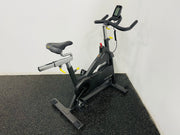
The Star Trac 8 Series Upright Bike supports seated cycling, with most of the work coming from the lower body. The quadriceps help drive the pedals downward, while the glutes and hamstrings assist through the rotation. The calves contribute at the ankle. Your trunk and upper body mainly support posture rather than power the exercise.
Resistance, cadence and duration affect how demanding the ride feels. A steady cadence supports aerobic conditioning, while higher resistance makes each pedal stroke more challenging. Good technique remains important: pedal smoothly without rocking, bouncing or pulling heavily on the handlebars.
Treat the bike as a cardio station, not a complete strength programme. Pair it with appropriately selected resistance exercises and mobility work for broader programming.
Star Trac 8 Series Upright Bike Setup
Start with a pre-use check. The supplied research indicates that the Uplift listing is likely related to the Star Trac 8UB, but the exact generation and console configuration of a used unit should be confirmed from its model label and console. Manufacturer documentation and the Uplift listing differ on dimensions, resistance description, programmes and other details.
Adjust the seat so your knee remains slightly bent when the related pedal is at its lowest point. Avoid reaching with your toes, locking the knee or sitting so far forward that the position feels cramped. Set any available reach adjustment so you can maintain a neutral trunk and relaxed shoulders.
Place both feet securely on the pedals and use the straps if fitted. Sit tall with a light handlebar grip. Confirm that the seat locks, the pedals rotate normally and the machine is stable before starting. The listing describes a self-generating bike, but the actual used unit should be tested for normal console startup and operation.
Confirm the Actual Used Unit
General 8UB documentation lists a 350-pound maximum user weight, contact and telemetric heart-rate monitoring, an alternator-based resistance system and 20 resistance levels. The Uplift listing describes different details, including electromagnetic resistance, 10 programmes and different dimensions. These are model or listing details, not confirmation of every feature on the particular used bike.
Inspect the current product listing and, where possible, the machine for its model and serial label, console type, seat adjustment, resistance response, pedals, heart-rate sensors, USB port, Bluetooth, accessory holders and included power components. The listing remains authoritative if a replacement unit returns.
Proper Form and Exercise Steps
Use this sequence for a controlled ride:
1. Sit centrally on the saddle and place both feet in the pedals. Adjust the straps so they hold the feet without restricting normal movement.
2. Set low resistance and begin slowly. Check that the seat remains locked and the cranks turn smoothly.
3. Keep your chest lifted, shoulders down and elbows soft. Hold the handlebars lightly rather than hanging your body weight from them.
4. Guide the knees in line with the feet. Avoid letting them collapse inward or move excessively from side to side.
5. Pedal smoothly through the available rotation. Keep the hips level and avoid bouncing on the saddle.
6. Increase resistance or cadence only after you can maintain the same posture and rhythm. Finish harder efforts with several easy minutes.
Contact grips or a chest strap may provide heart-rate information when available, but readings can be estimates when contact is inconsistent. Depending on configuration, the console may display time, speed, distance, revolutions per minute, energy used and heart rate.
How Hard Should You Ride?
The CDC talk test is useful when you are not using a personalised training zone. At moderate intensity, you should be able to talk but not sing. At vigorous intensity, conversation becomes difficult. If you have been inactive, begin below your intended intensity and build gradually. Anyone with relevant medical concerns or cardiovascular symptoms should obtain individual professional guidance before vigorous exercise. This is general training information, not medical advice.
Sets, Reps and Workout Progressions
Cardio on an upright bike is generally prescribed by time and intervals rather than traditional strength-training sets and repetitions. A practical beginner session is 5 minutes of easy pedaling, 10 to 20 minutes at an effort where conversation is possible but singing is not, followed by 5 minutes of easy cooldown.
First complete the duration with consistent form. Progress one variable at a time: add a few minutes, increase resistance or raise cadence. Avoid changing all three in the same workout.
After technique is consistent, introduce intervals with moderately harder pedaling separated by easy recovery. More experienced users can vary cadence and resistance, but advanced training should remain repeatable rather than relying on maximum resistance every session.
In a commercial facility, label sessions as easy, moderate or interval-based. Have users record duration, resistance setting and perceived effort. Resistance scales can differ between generations or configurations, so use the displayed level as a reference for that machine rather than comparing it directly with another bike.
Common Mistakes and Safety Checks
A saddle set too low can create a cramped position with a deeply bent knee. A saddle set too high can cause reaching, hip rocking and reduced control. Recheck the adjustment whenever another user takes the bike.
Avoid leaning heavily on the handlebars, shrugging, bouncing or gripping tightly. Do not chase a higher cadence if the feet lose contact with the pedals or the knees stop tracking comfortably. Reduce the workload when form deteriorates.
Before each session, inspect the seat lock, pedals, straps, crank rotation and stability. On a used unit, test resistance changes, console startup, display metrics, heart-rate grips and any applicable telemetry, Bluetooth, USB, fan or accessory features. Listen for clicking, slipping, unusual noise or excessive crank play. Stop using equipment that behaves unpredictably until it is assessed.
Follow the manual’s safety guidance, including staying within the stated user-weight limit and stopping if you feel faint, dizzy or unusually exhausted. Keep the surrounding area clear and lock every adjustment before pedaling.
Complementary Exercises for a Balanced Programme
Cycling provides repeated lower-body movement and aerobic work, but it does not train every movement pattern equally. Complement it with controlled upper-body pushing and pulling, trunk-stability exercises and resistance movements for the hips and legs. Examples include machine or cable rows, chest presses, supported squats, hip hinges and calf raises when appropriate for the user and facility.
Use the bike first as a warm-up, or place it on an upper-body or full-body training day as a cardio station. Scale complementary exercises appropriately and prioritise safe, repeatable movement over fatigue.
For a pre-owned Star Trac 8 Series bike, begin programming only after inspecting the actual unit. General model specifications describe a product family; they do not establish condition, operating hours, included accessories, warranty coverage or performance of the current used item.
Used-Equipment Verification Before Training
The supplied listing describes the bike as pre-owned and used like new, but that is a seller description rather than an independently verified assessment. It does not establish operating hours, prior commercial use, component wear, warranty coverage or whether every console and accessory feature works.
Before accepting a unit, check seat adjustment and locking, pedals and straps, crank rotation, resistance changes, console metrics, heart-rate sensors, connectivity and included accessories. Confirm stability and listen for abnormal noise. Resolve differences between the current listing and general 8UB documentation by checking the model label, serial information and console on the actual machine. Never assume a replacement unit has the same configuration or condition.
Practical Takeaway
The Star Trac 8 Series Upright Bike can support structured cardio programming when users fit the seat correctly, pedal smoothly and progress gradually. Teach staff and members to use the talk test, monitor form and perform basic equipment checks before each ride.
For a used machine, verify the actual configuration before writing programmes around specific resistance levels, display features or accessories. General specifications and training guidance are useful references, but the current product listing and inspected unit determine what is actually present.
Frequently asked questions
What muscles does the Star Trac 8 Series Upright Bike work?
It primarily trains the quadriceps, glutes, hamstrings and calves. Pair cycling with full-body resistance training for broader programming.
How should I set the seat on an upright bike?
Set it so your knee remains slightly bent when the related pedal is lowest. Keep your hips level without rocking or reaching with your toes.
How long should a beginner ride?
Try 5 minutes easy, 10 to 20 minutes at a moderate talk-test effort, and 5 minutes easy. Progress one variable at a time.
Can I use the bike for interval training?
Yes. Once steady riding is controlled, alternate short harder efforts with easy recovery while preserving smooth pedaling and posture.
Are the listed specifications guaranteed on a used bike?
No. Inspect the actual model label, console, resistance, adjustments and included features; the current listing governs the particular unit.
Explore Uplift Equipment

View Star Trac 8 Series Upright Bike and check current availability.
Star Trac 8 Series Upright Bike: Commercial Features and Used-Buying Guide
Star Trac 8 Series Upright Bike: Benefits, Uses and Buying Considerations