



Cascade Pro Bike Overview
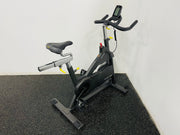
The Cascade Pro Bike is a compact indoor cycling bike for steady cardio, conditioning and interval training. The supplied Uplift listing identifies it as a Cascade Pro Bike, while its matching dimensions, weight and capacity most closely correspond to the standard Cascade Health & Fitness CMXPro indoor cycle. Because the exact model cannot be confirmed from listing data alone, the current product photos and model plate should remain the final reference.
The standard model uses a belt-driven flywheel and non-contact magnetic resistance. This provides a straightforward way to vary effort without requiring a large cardio-machine footprint. Its published dimensions make it relevant to commercial gyms, studios, training rooms and home facilities where floor space matters.
The specifications below describe the general model, not a guarantee about any particular pre-owned unit. Condition, accessories, service history and cosmetic wear must be checked on the current product listing.
Verified general specifications
Published dimensions are 42 inches long, 23 inches wide and 42 inches high. Machine weight is 96 pounds, shipping weight is 110 pounds and maximum user weight is 350 pounds. These figures align with both the supplied Uplift data and Cascade documentation.
Model documentation identifies a precision-balanced aluminum flywheel, reinforced Poly-V belt drive, welded frame, transport wheels and leveling feet. It also identifies caged pedals with straps, bottle holders and rear stretch pads. Check the actual used unit to confirm that these components are present and serviceable.
How the Cascade Pro Bike Works
The rider pedals against resistance from a magnetic system rather than a traditional friction brake. A resistance control changes the effort required, while the reinforced belt transfers pedaling force to the flywheel through precision drive pulleys. The owner’s manual identifies a 170-millimeter crank length.
The bike does not use a freewheel system. When the flywheel is moving, the pedals continue moving, so riders must control cadence and wait for both to stop before dismounting. This is important when staff introduce the machine to new members or group-class participants.
Manufacturer guidance recommends starting slowly, including at least a five-minute initial warm-up, and increasing pedaling rate or resistance gradually. Riders should never attempt to stop the bike by pushing backward against the pedals.
Adjusting the bike for different users
The standard CMXPro documentation identifies four-way seat and four-way handlebar adjustment. Set seat height so the knee remains slightly bent at the bottom of the pedal stroke. Adjust the seat fore and aft so the front-leg tibial tuberosity is approximately above the pedal axle.
Position the handlebars so the rider can reach them with a slight elbow bend. Dismount before changing seat or handlebar settings, then confirm that each mechanism locks securely before pedaling.
Training Applications in a Commercial Gym
The Cascade Pro Bike supports common indoor-cycling applications without a complicated setup. Coaches can use it for continuous moderate-effort cardio, short intervals, warm-ups and general conditioning. Its compact footprint may help a facility place multiple bikes in a studio or add one to a multipurpose training room.
For steady aerobic work, the rider can warm up gradually, settle into a manageable cadence and adjust resistance to maintain controlled effort. For intervals, a coach can alternate higher and lower resistance or pedaling rates, selecting recovery periods according to the participant’s ability. The equipment does not prescribe a training protocol, so programming should match the user and be supervised appropriately.
Adjustable seat and handlebar positions can support mixed experience levels, provided each rider can achieve a secure, comfortable setup. Facilities should confirm that the 350-pound maximum user-weight specification is suitable for every intended user.
Who is it suitable for?
The bike may suit users seeking indoor cycling, general cardio or conditioning in a gym, studio, training room or home setup. The stated maximum user weight is an equipment limit, not a substitute for exercise screening or professional advice where health concerns exist.
The listed 42-by-23-inch footprint describes the machine, not the complete operating area. Place it on a stable, level surface and leave sufficient clearance for mounting, dismounting and safe movement, consistent with the owner’s guidance and facility layout.
Using a Pre-Owned Cascade Pro Bike in a Facility
A used machine must be evaluated as an individual piece of equipment rather than by its original specification sheet. The supplied listing describes the product as pre-owned and includes a condition label, but that does not establish mileage, prior commercial use, maintenance history or the condition of wear components. The current product listing remains authoritative for the particular unit when it returns to sale.
Before service, inspect the frame, adjustment tubes, seat, handlebars, pedals, straps, leveling feet and transport wheels. Confirm that the bike sits level without rocking. Check that seat and handlebar adjustments move through their available range and lock securely. Verify pedal tightness and strap condition.
During a controlled test, listen for clicking, knocking or unusual roughness from the flywheel, bearings, crank area and bottom bracket. Inspect belt condition and tension, and check crank-bolt tightness. Clean the frame and flywheel as recommended. Worn or inoperable components should be repaired or replaced before use.
What the listing may not confirm
The supplied information does not confirm the serial number, exact model number, accessory completeness, service history, belt condition, bearing condition, bottom-bracket condition or transferability of any manufacturer warranty. It also does not establish whether a console or performance-data system is included.
Available evidence most closely identifies the standard CMXPro or Cascade Pro indoor cycle rather than the CMXPro Power version. Power-model features such as a console, resistance levels and connectivity should not be assumed because they are not stated in the Uplift listing. Check the control area and model plate before relying on any feature.
Commercial Buying Checklist
Compare the verified dimensions and 350-pound maximum user weight with the planned room layout and member base. Use the published 110-pound shipping weight when considering access through doors and corridors, while recognizing that actual delivery and handling requirements depend on the shipment.
Ask the listing to clarify model identification, included pedals and straps, adjustment hardware, visible wear, service work and the condition of the belt, bearings, crank and leveling feet. Request photographs of the model plate and control area if they are not visible.
After installation, check fasteners and adjustments, then conduct a low-intensity test before assigning the bike to regular users. Keep inspection records for shared equipment and remove it from service if a safety-related component is loose, damaged or inoperable.
Frequently asked questions
Is the Cascade Pro Bike the same as the Cascade CMXPro?
Available evidence indicates that it most closely matches the standard Cascade Health & Fitness CMXPro. Confirm the model plate and current listing photos because the name alone is not conclusive.
What are the verified dimensions and weight?
The bike is listed at 42 inches long, 23 inches wide and 42 inches high. Machine weight is 96 pounds, shipping weight is 110 pounds and maximum user weight is 350 pounds.
Does the Cascade Pro Bike have magnetic resistance?
Standard-model documentation identifies non-contact magnetic resistance. Confirm that the actual unit is the standard model rather than assuming CMXPro Power features.
How should the bike be adjusted for a new rider?
Set seat height for a slightly bent knee at the bottom of the stroke, then adjust fore-and-aft seat position and handlebar reach. Dismount before changing settings and verify that adjustments lock.
What should I inspect on a used Cascade Pro Bike?
Inspect the frame, pedals, straps, adjustment mechanisms, leveling feet, belt, flywheel, bearings, crank bolts and bottom bracket. Test for rocking, clicking, knocking or roughness before use.
Does the Cascade Pro Bike include a console?
The supplied listing does not confirm a console. Do not assume CMXPro Power console or connectivity features; check the current product photos and model information.
Explore Uplift Equipment

View Cascade Pro Bike and check current availability.
Cascade Pro Bike: Compact Commercial Cardio for Practical Training
Cascade Pro Bike Workout Guide: Muscles Worked, Form, and Training Tips