



Why the Cascade Pro Bike Fits Multiple Training Environments
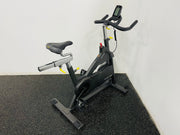
The Cascade Pro Bike is a compact indoor cycling bike for straightforward cardio, conditioning and interval work. Its listed dimensions are 42 inches long, 23 inches wide and 42 inches high, creating a space-efficient footprint for a commercial gym, personal-training room, studio or home gym. Exact placement should still allow safe access, riding movement and dismounting.
The machine weight is listed as 96 pounds, providing a substantial platform while remaining more manageable than many larger commercial cardio machines. Its listed maximum user weight is 350 pounds. These are general model specifications, not a statement about the condition of a particular pre-owned unit; inspect the current product listing and actual machine separately.
The bike’s strongest use case is a facility that wants repeatable indoor cycling without committing space to a larger console-based cardio station. Users can vary cadence, resistance and workout duration for warm-ups, steady-state sessions, intervals or conditioning circuits.
Suitable Users and Training Goals
The bike can serve beginners, general fitness users, personal-training clients and experienced riders. Adjustable seat and handlebar positions support individual setup, although buyers should confirm that the adjustment range suits the intended users. Training intensity should reflect experience, goals and relevant health guidance; the machine does not guarantee a particular fitness result.
Design Advantages and Ease of Use
The documented model uses non-contact magnetic resistance and a reinforced Poly-V belt drive. Magnetic resistance avoids direct brake-pad contact with the flywheel, while the belt-drive format is designed for quiet operation and reduced routine wear points compared with a chain-driven design. These characteristics can be useful in shared training spaces where simple operation matters.
Manufacturer documentation also identifies a precision-balanced aluminum flywheel, welded frame, forged cranks, oversized bottom bracket and leveling feet. Transport wheels can help with repositioning, while caged pedals with straps, bottle holders and rear stretch pads support the indoor-cycle format. Verify the presence and condition of these components on the actual used unit.
Model specifications describe the product family, not the current state of a pre-owned machine. Belt tension, bearings, crank bolts, pedals, straps and adjustment hardware can change with use and age.
Rider Setup and Safety
The documented seat and handlebars offer four-way adjustment for height and fore-aft positioning. Manufacturer guidance recommends a slightly bent knee at the bottom of the pedal stroke and handlebars reachable with a slight elbow bend. Adjust the bike before riding, and dismount before changing settings.
Use the bike on a stable, level surface with clearance around it. This model does not use a freewheel system, so the pedals continue moving while the flywheel moves. Do not try to stop by pushing backward against the pedals; wait until the flywheel and pedals stop before dismounting.
Training Benefits for Commercial Gyms and Studios
An indoor cycle can provide conditioning without requiring the footprint of a larger cardio unit. The Cascade Pro Bike’s listed 42-by-23-inch footprint may help a facility organize stations or preserve room for strength, mobility and group-training activities. Layout decisions must account for safe access and rider movement, not dimensions alone.
For commercial gyms, the bike can support a warm-up before resistance training, an interval station in a circuit, a dedicated cardio session or a simple option for members who prefer cycling. In a training room, coaches can use the same equipment across sessions while adjusting effort for each client.
The listed 350-pound maximum user weight broadens the potential user base, but it is a limit rather than a recommendation to overlook fit, comfort or medical considerations. Staff should explain setup, resistance control, stopping procedure and safe dismounting before independent use.
Practical Programming Considerations
The owner’s guidance recommends beginning with at least a five-minute warm-up, then increasing cadence or resistance gradually. Intervals should match the rider’s ability and preserve controlled technique. The bike can support varied intensities, but the supplied listing does not confirm performance data or a console.
Buyers requiring watt measurement, connectivity, programmed resistance or workout tracking should verify those features on the actual listing and model plate. Research distinguishes the standard Cascade Pro from the CMXPro Power version, so Power-version features should not be assumed.
Why Consider Pre-Owned Commercial Fitness Equipment?
Pre-owned equipment can provide an established commercial-style training format while helping buyers manage space and equipment requirements. A used bike may suit smaller studios, private facilities and home setups when the priority is a straightforward mechanical platform rather than the newest digital features.
The essential distinction is between general model facts and the individual machine. Supplied product information does not establish the specific unit’s mileage, prior commercial use, service records, serial number, belt condition, bearing condition, pedal wear, cosmetic wear, accessory completeness or warranty transferability.
The current product listing remains authoritative for the actual used item. Review its photographs and condition description, confirm what is included and ask for clarification when practical purchasing questions remain unanswered. A seller’s condition label is not a substitute for checking components that affect safe operation.
Used-Unit Inspection Checklist
Before service, inspect pedals and straps, crank bolts, belt condition and tension, flywheel movement, bearings, bottom bracket, stabilizer bolts, leveling feet and adjustment mechanisms. Check for rocking, clicking, roughness, looseness or resistance-control problems. Confirm that the seat and handlebars lock securely.
The owner’s manual advises replacing worn or inoperable components and not using the machine until repairs are complete. Facilities should document inspection results and establish checks appropriate to usage frequency.
Limitations to Weigh Before Buying
The Cascade Pro Bike is not a substitute for every connected cardio console. The supplied information does not confirm a console, Bluetooth, ANT+ connectivity, watt measurement or built-in workout programs. Buyers who require those functions should verify them rather than infer them from the model name.
Moving pedals require user awareness because there is no freewheel system. Fit is another consideration: adjustable seat and handlebars may help, but users should confirm the range and riding position where possible.
Pre-owned status adds uncertainty that published specifications cannot remove. Service history, wear and included accessories must be checked on the current listing and, where possible, through inspection. Those limitations define the due diligence required for a responsible purchase.
Frequently asked questions
What is the maximum user weight for the Cascade Pro Bike?
The listed maximum user weight is 350 pounds. This general specification does not replace inspection of the actual pre-owned unit.
How much space does the Cascade Pro Bike require?
Listed dimensions are 42 inches long, 23 inches wide and 42 inches high, plus clearance for access and dismounting.
Does the Cascade Pro Bike include a performance console?
A console is not confirmed. Do not assume standard Cascade Pro equipment includes CMXPro Power features such as connectivity or watt data.
What should I inspect on a used Cascade Pro Bike?
Check pedals, straps, belt, flywheel, bearings, bottom bracket, crank bolts, leveling feet, stabilizer bolts and adjustment locks. Repair worn or loose parts before use.
Is the Cascade Pro Bike suitable for beginners?
It can suit beginners when correctly adjusted and used gradually. Follow warm-up, resistance and stopping guidance, and wait for the pedals to stop before dismounting.
Explore Uplift Equipment

View Cascade Pro Bike and check current availability.
Cascade Pro Bike: Commercial Indoor Cycling Features, Uses and Used-Buying Guide
Cascade Pro Bike Workout Guide: Muscles Worked, Form, and Training Tips