



What the FreeMotion S11.9 Trains
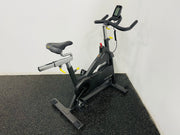
The FreeMotion S11.9 is a studio-style indoor cycle suited to steady aerobic riding, interval training, and higher-resistance seated climbing. The chain-drive model uses magnetic eddy-current resistance and a perimeter-weighted cast-iron flywheel. It is non-freewheel, meaning the pedals continue moving while the flywheel rotates. This is a general model characteristic, not a statement about any particular used unit’s condition.
Cycling primarily trains the quadriceps, hamstrings, glutes, and calves. The trunk and upper body help stabilize the rider. Resistance, posture, cadence, and whether you remain seated or stand change the emphasis. Seated riding is the simplest starting point; standing increases balance and loading demands and should be introduced only when control is consistent.
Choose the training emphasis
For aerobic work, select a manageable resistance and use the talk test. The CDC describes moderate effort as an intensity at which you can talk but not sing; vigorous effort generally permits only a few words. For climbing, increase resistance gradually while keeping the pedal stroke controlled. For intervals, alternate planned harder efforts with easier recovery riding.
Set Up the Bike Before Riding
Place the bike on a level surface with a mat underneath and approximately two feet of clearance, as stated in the user manual. Check that the machine is stable and that the seat, handlebars, adjustment pins, and locking controls are secure. The general S11.9 specification provides vertical and fore-and-aft adjustment for both seat and handlebars.
The model is listed with a maximum user weight of 350 pounds, but the current product listing is authoritative for the specific used item, included components, and condition. Before riding, inspect the actual pedals, toe cages or SPD mechanisms, cranks, saddle, handlebar assembly, and resistance control. Do not assume a used unit has the accessories or condition of a new machine.
Seat and handlebar position
Set the seat so the knee retains a slight bend when the corresponding pedal is at its lowest point. Start with the seat level and adjust gradually. Place the handlebars where you can reach them without aggressively rounding your back or locking your elbows. Keep the grip relaxed, shoulders down, and torso stable. Tighten every adjustment control before riding. The manual also advises tightening the resistance knob when the bike is not in use.
Proper Form and Exercise Steps
Begin with several minutes of easy pedaling while checking your position. Keep your feet secured, hold the handlebars lightly, and keep the knees generally aligned with the feet. Maintain a quiet upper body and avoid bouncing on the saddle. Do not change foot position while the pedals are moving quickly. Because the bike is non-freewheel, control the pace rather than trying to stop the pedals abruptly with your legs.
For a steady ride, choose resistance that permits consistent movement and continuous breathing. For a seated climb, turn resistance upward gradually, stay connected to the saddle, and slow only enough to preserve control. For intervals, ride easily first, increase effort for a planned period, then reduce resistance for recovery. Finish with easy pedaling instead of stopping abruptly.
A practical beginner session
Start with five minutes of easy riding, followed by ten to fifteen minutes at a conversational moderate effort, then five minutes of easy pedaling. Shorten the middle segment if needed and build duration gradually. Focus on repeatable technique rather than maximum resistance. The CDC recommends adults accumulate at least 150 minutes of moderate-intensity aerobic activity or 75 minutes of vigorous activity weekly, plus muscle-strengthening work on at least two days. That is a general guideline, not a required workout prescription.
Sets, repetitions, and progression
Cycling is usually programmed by time, effort, and intervals rather than traditional repetitions. Begin with three or four controlled one-minute work periods separated by two minutes of easy riding. Add time or another interval only when posture and pedal control remain consistent. For endurance, increase total easy-to-moderate riding gradually instead of raising duration and resistance together.
Advanced riders can use longer intervals, stronger seated climbs, or mixed moderate and vigorous efforts. Progress one variable at a time: increase duration, interval count, or intensity, but not all three at once. Standing is optional and should not compensate for resistance that is too high.
Common Indoor Cycling Mistakes
A saddle that is too low can create excessive knee bend; one that is too high may encourage reaching or hip rocking. Make small adjustments and confirm the mechanism is locked. Avoid placing excessive body weight on the handlebars. Keep the shoulders relaxed, elbows softly bent, chest open, and back controlled.
Resistance that is too high can produce grinding, jerky movement, or loss of control. Reduce it until the stroke is smooth. Learn the emergency stop before a hard session: the manual states that pushing the resistance knob downward stops the flywheel. Do not use your legs to halt rapidly.
Inspect the used machine separately from the model design
The listing describes a pre-owned machine, but the current item must be evaluated through its listing and inspection. Check for chain skipping, tight spots, unusual grinding, crank or bottom-bracket play, damaged pedals, loose adjustment hardware, corrosion, and resistance-control problems. Confirm the alternator and battery system, console if included, and other electronics operate as expected.
Research identifies conflicting descriptions of the frame material, with references citing aluminum or steel with zinc plating. Treat that material as unconfirmed unless the serial label or inspection establishes it. General specifications do not establish the condition of a particular used unit.
Complementary Training and Safety
Pair cycling with muscle-strengthening work on at least two days if your overall plan follows the CDC activity guidelines. Useful complementary movement patterns include controlled squats, hinges, lunges, calf raises, rows, presses, and trunk-strengthening exercises. Choose resistance and volume appropriate to your experience. Cycling should complement, not replace, varied training.
For a commercial facility, use a pre-use checklist: confirm stability, inspect pedals and adjustment points, test resistance, and identify the quick-stop control. Follow the manufacturer’s manual for inspection and maintenance, and replace worn parts promptly. Stop if the machine behaves unexpectedly or you cannot maintain control. This is general training information, not medical advice; seek qualified professional guidance for individual health or exercise questions.
Chain-drive considerations
This article concerns the chain-drive S11.9, not the separate Carbon Drive version. A chain may produce more mechanical noise than the belt version, but abnormal skipping, grinding, sudden resistance changes, or play require inspection. The model is listed as self-powered through an alternator and battery; electrical operation and included electronics must be confirmed on the actual used item. The current product listing remains authoritative for its condition and components.
Frequently asked questions
What muscles does the FreeMotion S11.9 work?
It primarily trains the quadriceps, hamstrings, glutes, and calves, while the trunk and upper body stabilize the rider.
How high should the S11.9 seat be?
Set it so your knee has a slight bend when the pedal is at its lowest point, then secure the adjustment before riding.
Is the S11.9 suitable for beginners?
Yes. Begin with short, easy-to-moderate sessions, low resistance, controlled posture, and gradual increases in duration.
How can advanced riders progress?
Use longer intervals or seated climbs, progressing one variable at a time while preserving smooth pedal control.
Does the S11.9 have a freewheel?
No. The chain-drive model is non-freewheel, so learn and test the quick-stop control before intense riding.
What should I inspect on a used S11.9?
Check the chain, cranks, bearings, pedals, adjustment hardware, resistance, quick-stop function, corrosion, electronics, accessories, and exact listing condition.
Explore Uplift Equipment

Freemotion S11.9 Chain Drive Indoor Cycle
See this equipment’s current price, condition and availability.
View Freemotion S11.9 Chain Drive Indoor Cycle and check current availability.
FreeMotion S11.9 Chain Drive Indoor Cycle: Commercial Buying and Training Guide
FreeMotion S11.9 Chain Drive Indoor Cycle: Benefits, Uses and Buying Considerations